The Technical Shell: Buying Gorpcore's Anchor Piece Properly
Gorpcore’s anchor piece — the technical shell — spans from fashion jackets wearing outdoor styling to alpine armor with specs to justify. Buying it properly means reading past the aesthetic: the ratings, the fit checks and the honest tier for your actual life.

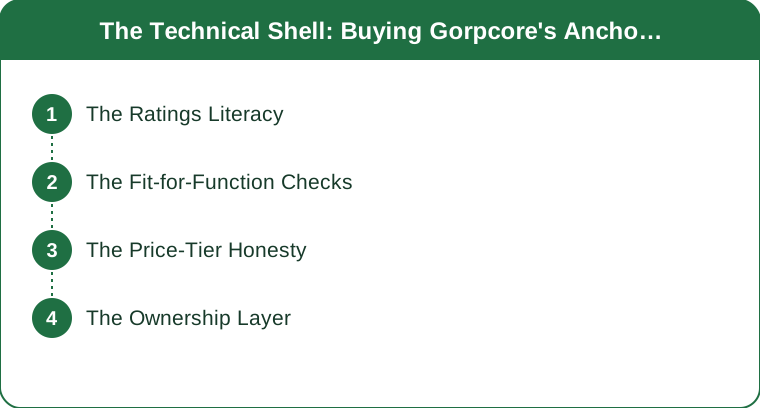
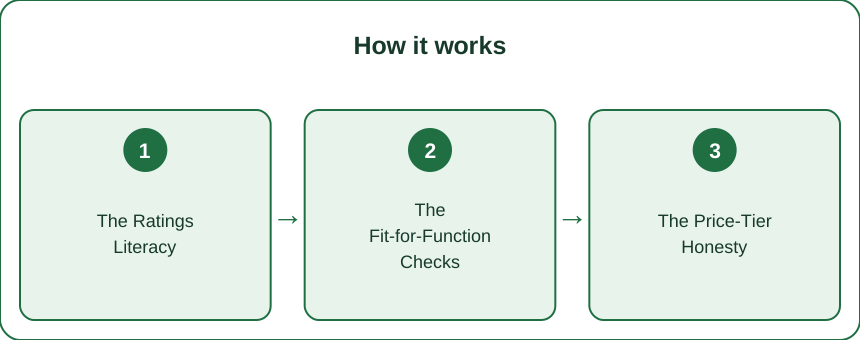
The Ratings Literacy
Reading the hang tag: the waterproof numbers (the mm ratings — 10,000mm handles real rain, 20,000mm handles storms; the ‘water-resistant’ label without numbers is a drizzle jacket wearing rain vocabulary), the breathability pair (the g/m² ratings that decide whether you soak from inside — the higher number earns its price exactly when you hike-or-hurry; the taped-seams check that separates waterproof construction from waterproof fabric), the membrane names decoded (the branded membranes and the house versions — the name premium versus the spec parity; the numbers outrank the logos), and the DWR maintenance reality (the outer coating that wets-out over time — the wash-and-reproof cycle from the running-jacket chapter; waterproofness is upkeep, not a purchase).
The Fit-for-Function Checks
The fitting-room exam: the layering audit (the shell tried over its intended maximum — the fleece-or-insulation layer; the fashion-fit shell that can’t host a mid-layer is a three-season jacket sold as four), the reach test (arms overhead — the hem that rides to your ribs fails the trail; the articulated cuts stay put), the hood reality (cinch-able, brim-ed and cap-compatible — the hood is half the jacket’s weather function; the decorative hood is the fashion-shell tell), the pocket audit (accessible with a pack’s hipbelt on — the placement detail that separates trail-designed from street-designed), and the length choice (the hip-length standard versus the longer coverage — the cycling-and-sitting realities voting for their preference).

The Price-Tier Honesty
Matching spend to life: the fashion-gorpcore tier (the outdoor-styled jackets with modest specs — legitimate for city rain and the aesthetic; priced for looks, performing accordingly; the reverse-image and spec-check habits from the dupe chapter apply), the do-everything middle (the 10-20k-rated, taped, hooded workhorses — the tier most actual lives need; the day-hike, the commute, the festival; the price-performance peak), the alpine tier (the storm-rated, feature-dense shells — earned by mountain weather and multi-day exposure; the over-purchase most city wearers make for logo reasons), and the used-market note (technical shells resell functional — the secondhand-activewear logic with a reproof-on-arrival step; the premium tier at middle prices).
The Ownership Layer
Keeping it technical: the care protocol (technical-fabric wash, no softener ever — the softener kills DWR and breathability both; the reproof spray-or-wash-in seasonally), the layering system context (the shell is one third — the base-and-mid layers from the winter-exercise chapter complete what the shell anchors; the system beats the single heavy jacket), the repair culture (the patch kits and manufacturer repair programs — the technical-shell world’s sustainability wing; the taped seam re-serviced beats the jacket replaced), and the honest-use audit (the shell that never leaves the city is still a fine purchase IF priced for that job — the buying guide’s whole function is matching the tier to the truth; function-first was always gorpcore’s actual aesthetic). Numbers read, fit tested, tier honest: the anchor, earned.
10k-mm minimum for real rain, try it over the fleece, hood must cinch, reproof seasonally. The technical shell rewards spec literacy — buy the numbers your life actually needs.
Keep Reading
This article is for general informational and styling purposes only. Fit, sizing, and product availability may vary.